

Paper Cushioning vs Foam Packaging for Shipping Protection
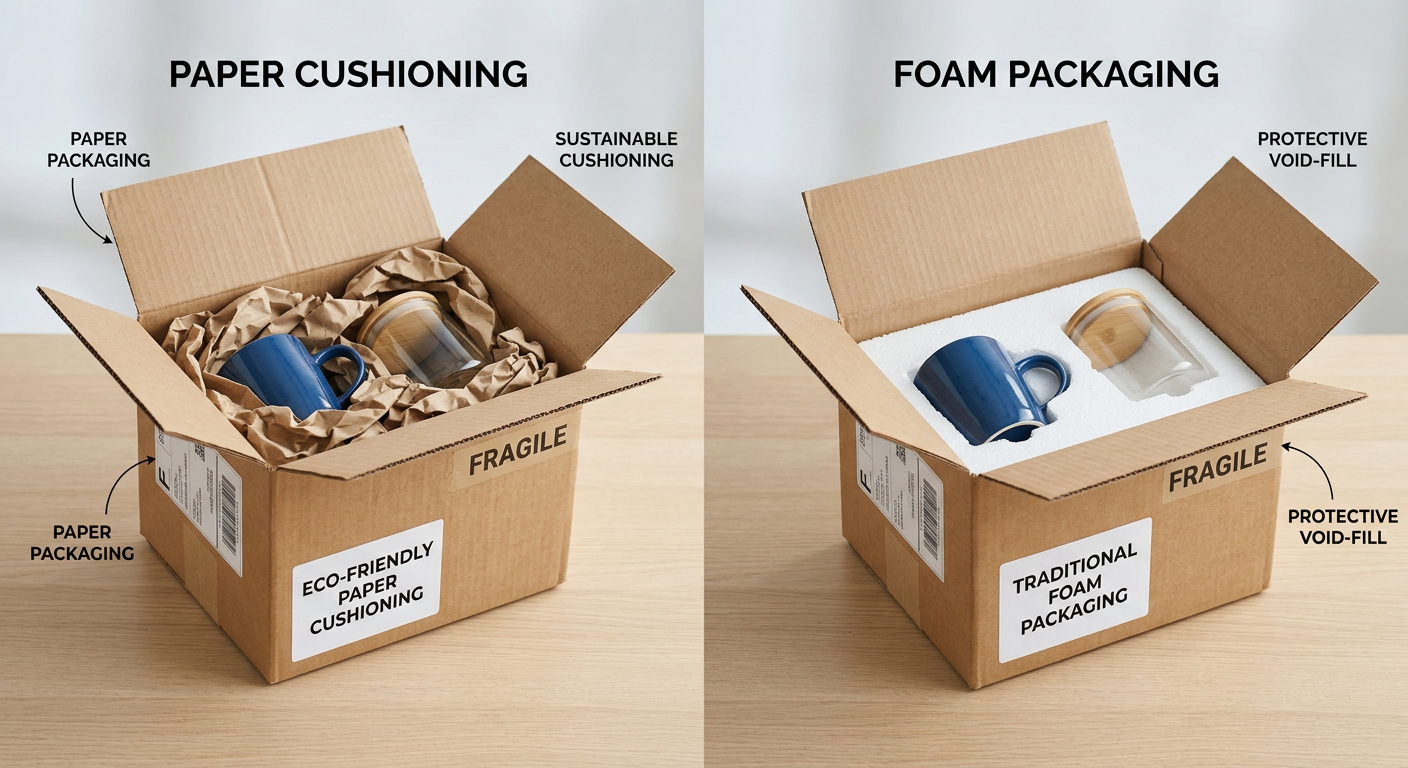
When businesses ship fragile products, choosing the right protective material matters. Two common options are paper cushioning and foam packaging. Both help protect items, but they work in different ways.
By understanding these differences, businesses can choose the best solution for their shipping needs.
What Is Paper Cushioning?
Paper cushioning uses kraft or recycled paper that is folded or crumpled to create padding. It fills empty space inside shipping cartons and keeps items from moving during transit.
In addition, paper cushioning works well with corrugated boxes and other cushioning & wrapping materials to keep products stable. It also supports sustainable practices, as explained in
sustainable packaging.
materials to keep products stable.
What Is Foam Packaging?
Foam packaging protects products by absorbing shock and vibration. It can wrap around items or form inserts that hold products in place.
For example, businesses use several types of foam packaging:
- Foam rolls
- Foam inserts
- Foam-in-place cushioning
As a result, many industries rely on foam to protect electronics, automotive parts, and industrial equipment.
Benefits of Paper Cushioning
- Environmentally Friendly: It uses recyclable and biodegradable materials.
- Cost-Effective: It helps reduce shipping costs because it is lightweight.
- Versatile: It works for many product sizes.
- Easy to Recycle: It supports sustainable packaging efforts.
Because of these benefits, paper cushioning works well for eco-conscious businesses.
Benefits of Foam Packaging
- Strong Shock Absorption: It protects fragile items from impact.
- Custom Fit: It molds around products for better protection.
- Durable: It supports heavy or sensitive items.
- Reliable: It keeps its shape during shipping.
Therefore, foam packaging is a strong choice for high-value or delicate products.
When to Use Each Material
In general, paper cushioning works best for:
- E-commerce shipments
- Consumer goods
- Retail packaging
- Lightweight items
On the other hand, foam packaging is ideal for:
- Electronics shipping
- Automotive parts
- Industrial equipment
- Highly fragile products
In many cases, businesses combine both materials with other
shipping room supplies
to improve packing efficiency.
Final Thoughts
Overall, both paper cushioning and foam packaging offer reliable protection. However, the best choice depends on your product, shipping distance, and sustainability goals. By selecting the right material, businesses can reduce damage and improve delivery performance.
Your account